Rival Podiums, Richer Ears: How New York's Orchestra Wars Elevate Every Listener
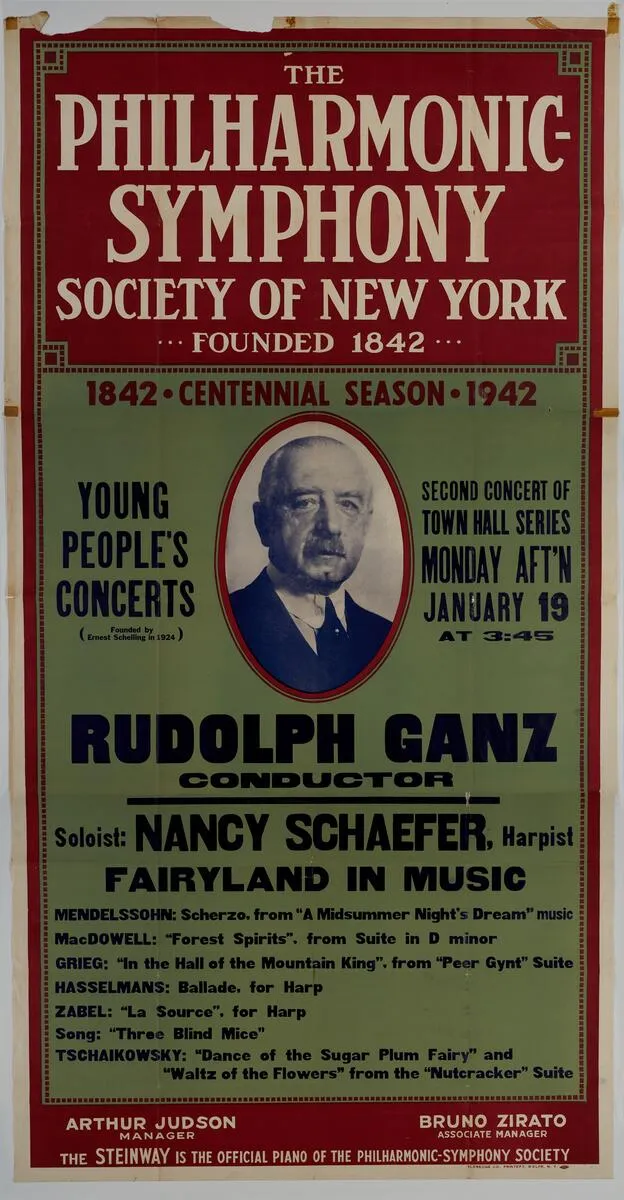
Photo: New York Philharmonic, Public domain, via Wikimedia Commons
New York has never been a city that tolerates complacency. Its financial markets, its restaurants, its fashion houses — all operate under the constant pressure of proximity and competition. Classical music, perhaps surprisingly to the uninitiated, is no different. Within a few square miles, some of the most formidable orchestral institutions in the Western hemisphere position themselves against one another every season, each striving to define what orchestral excellence means in the twenty-first century. For the attentive listener, this rivalry is not merely institutional drama. It is the engine that keeps standards extraordinarily high — and it makes following New York's orchestral scene one of the most intellectually stimulating pursuits available to the serious music lover.
The Landscape of Competition
At the center of any conversation about New York's orchestral culture stands the New York Philharmonic, the oldest symphony orchestra in the United States, with a history stretching back to 1842. Its programming decisions, guest conductor choices, and commissioning priorities are watched closely by the city's music community — and by the ensembles that share its audience.
Yet the Philharmonic operates in a far more crowded field than its storied reputation might suggest. The Metropolitan Opera Orchestra, though embedded within the operatic tradition, is widely regarded as one of the finest pit orchestras in the world, and its players bring a depth of collaborative experience that shapes the city's overall orchestral culture. The Orchestra of St. Luke's, the American Symphony Orchestra, and the New York City Ballet Orchestra each carve out distinct identities, serving audiences whose tastes overlap considerably with those drawn to Lincoln Center's main stages.
This density of talent and ambition creates something rare: a city where institutional one-upmanship directly benefits the public.
Programming as a Competitive Sport
When one major ensemble announces a season built around rarely performed twentieth-century works, others take notice. When a rival secures a celebrated conductor for a landmark Mahler cycle, programming committees respond — sometimes with counter-programming that is equally ambitious, sometimes with a deliberate pivot toward repertoire the competition has ignored.
This dynamic produces seasons of remarkable variety. A listener who commits to following two or three of New York's major ensembles across a single season will encounter a breadth of repertoire that no single institution could reasonably provide. One might hear the Philharmonic's authoritative account of a Brahms symphony in October, then encounter the same work performed with entirely different interpretive priorities by a chamber-scaled ensemble at a smaller venue in November. The comparison is involuntary and instructive.
Sophisticated listeners learn, through this exposure, to hear not just notes but choices. Why did this conductor take that tempo? Why did that ensemble opt for a leaner string section in a work that tradition assigns to a fuller complement? The competitive environment generates interpretive diversity, and interpretive diversity generates critical thinking.
Performance Standards and the Pressure of Proximity
Musicians in New York are acutely aware that their colleagues from rival ensembles may be seated in the hall on any given evening. The city's orchestral players move fluidly between freelance engagements, chamber projects, and principal positions, creating a professional community that is simultaneously collegial and intensely self-aware.
This proximity raises the floor for acceptable performance. An ensemble that delivers a technically adequate but uninspired reading of a standard work risks unfavorable comparison with a rival's recent, celebrated account of the same piece — a comparison that will be made explicitly in the city's critical press and implicitly among the audience members who attended both concerts. The result is a culture in which orchestras are rarely content with adequacy.
For listeners willing to engage with this culture, the rewards are considerable. Attending performances across multiple ensembles over the course of a season sharpens one's ear in ways that single-institution loyalty cannot. You begin to understand that there is no single definitive account of a Beethoven symphony, that every ensemble brings its own history, its own acoustic environment, and its own interpretive convictions to the podium.
What the Rivalry Means for Audience Engagement
Competition does not stop at the stage door. New York's major orchestras have invested substantially in pre-concert programming, lecture series, and digital content — partly out of genuine educational mission, and partly because an informed audience is a loyal one. When the Philharmonic offers a pre-concert talk that contextualizes a rarely heard work, it is also demonstrating a commitment to audience development that its rivals must match or exceed.
For the listener, this translates into an embarrassment of riches. A curious concertgoer in New York can attend lectures, panel discussions, open rehearsals, and post-performance conversations with artists — often at no additional cost — that collectively constitute a graduate-level education in orchestral music. Following the rivalry, in other words, is not passive entertainment. It is an active practice of cultural engagement.
Becoming a More Discerning Listener
The practical implication for anyone seeking to deepen their relationship with orchestral music is straightforward: do not confine yourself to a single ensemble. Purchase subscriptions to two organizations whose programming philosophies differ. Attend performances of the same major work by different ensembles within the same season when the opportunity presents itself. Read the critical responses — both the formal reviews in publications such as The New York Times and the more discursive commentary available in specialist journals — and allow those perspectives to inform, but not replace, your own.
Over time, you will find that the rivalry between New York's orchestras has become internalized. You will bring to every performance the accumulated memory of other performances, other interpretations, other choices. That accumulated memory is precisely what transforms a casual concertgoer into a genuine listener — someone for whom a symphony is not background music but a living argument about how great art ought to sound.
New York's orchestras compete so that you may listen better. It is, in the end, a rivalry conducted entirely in your service.