The Velvet Rope Problem: How Classical Music's Culture of Exclusion Dims Its Own Light
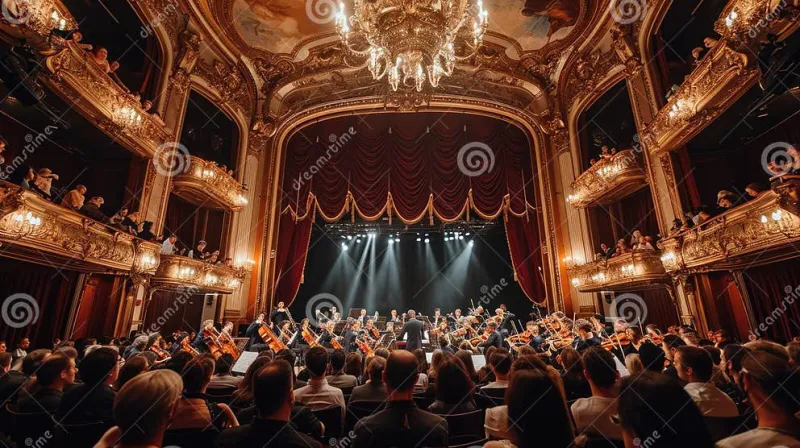
Photo: diverse audience classical music concert hall elegant performance, via thumbs.dreamstime.com
There is a particular kind of silence that falls over a concert hall when someone does something wrong. Not the silence of rapt attention, which is among the most beautiful things a room full of people can produce, but the silence of social correction—the turned heads, the audible exhale, the withering glance directed at a newcomer who applauded between movements or arrived wearing the wrong clothes. It is a silence that communicates, with considerable efficiency, that they do not belong here.
This is the velvet rope problem. And it is doing serious damage to an art form that deserves far better.
What Gatekeeping Actually Looks Like
The term "gatekeeping" is sometimes deployed so broadly as to lose precision, so it is worth being specific. In the context of classical music, gatekeeping manifests in ways both overt and nearly invisible. It appears in the programming decisions of major institutions that default to the same canonical works season after season, implicitly signaling that the repertoire is closed and settled. It appears in the unwritten dress codes that make first-time attendees feel underprepared before a single note has been played. It appears in pre-concert lectures and program notes written in a register that presupposes decades of prior study.
It appears, perhaps most damagingly, in the attitudes of audience members themselves—the hushed corrections, the competitive displays of arcane knowledge, the faint condescension directed at anyone who confesses unfamiliarity with a particular conductor's 1973 recording of a Bruckner symphony. These behaviors are rarely malicious. They emerge from genuine love of the tradition. But their effect is exclusionary, and the cumulative weight of that exclusion is measurable in declining attendance figures, aging demographics, and an art form that increasingly speaks only to those already fluent in its conventions.
The Cost Is Not Abstract
Orchestras across the United States have been grappling with audience contraction for decades. The League of American Orchestras has documented consistent declines in first-time attendance and persistent demographic homogeneity that does not reflect the actual diversity of American cities. New York, a metropolis of extraordinary cultural richness, should in theory be the ideal environment for a thriving, heterogeneous classical audience. In practice, many of its major venues draw from a narrow slice of the population.
This is not simply a matter of access, though access is certainly part of the equation. Ticket prices at flagship institutions remain prohibitive for many households, and the geography of major concert halls—clustered on the Upper West Side and Midtown—is not neutral. But cost and location alone do not fully explain the gap. Survey data consistently shows that potential new audiences cite social discomfort—the fear of doing something wrong, of being visibly out of place—as a significant deterrent. The music itself is rarely the problem. The culture surrounding it frequently is.
Voices From the Front Lines
Musicians and educators working to address these barriers tend to share a common observation: the problem is not that people lack interest in the music, but that they have been made to feel that the music is not for them.
Conductors and ensemble directors running community outreach programs in the outer boroughs report that audiences who encounter classical music in informal settings—community centers, libraries, public parks—respond with genuine enthusiasm and curiosity. The same works that can feel forbidding at Lincoln Center become approachable, even thrilling, when stripped of the institutional apparatus that signals exclusivity. The music has not changed. The context has.
Educators working in public school systems across the five boroughs make a related point. Students who receive early exposure to classical music—who are invited into it rather than made to feel they must earn their way in—develop lasting connections to the repertoire. The gatekeeping begins early, and so must the dismantling of it.
The Patron's Responsibility
Established patrons and supporters of classical institutions occupy a position of genuine influence, and that influence carries a corresponding responsibility. The financial contributions of dedicated supporters fund programming, education initiatives, and the operational continuity of orchestras and chamber ensembles. But the culture of an institution is shaped by more than its budget. It is shaped by the behavior and expectations of its most committed participants.
There are concrete steps that patrons and engaged audience members can take. Welcoming unfamiliar faces rather than monitoring them for infractions of etiquette is a beginning. Resisting the impulse to perform expertise—to signal one's own deep familiarity with the canon in ways that implicitly diminish others—is another. Advocating within institutional structures for programming that reflects the full breadth of the classical tradition, including works by composers whose names do not yet appear on the standard syllabi, sends a message about what the community values.
None of this requires abandoning the standards of attentiveness and respect that make a great concert possible. Silence during performance is not elitism—it is a courtesy to performers and fellow listeners alike. The distinction worth drawing is between the conventions that serve the music and the conventions that serve only to police membership in a social club.
Excellence and Openness Are Not in Conflict
A persistent anxiety among defenders of the classical tradition holds that any move toward accessibility necessarily involves a lowering of standards—that welcoming new audiences means dumbing down the repertoire, loosening the demands of the form, or trading artistic integrity for populist appeal. This anxiety is understandable but largely unfounded.
The most successful models of audience expansion in classical music have not involved compromise. They have involved invitation. When the New York Philharmonic launched its Young People's Concerts under Leonard Bernstein in the late 1950s, it did not simplify Beethoven. It explained him, with passion and intelligence, to audiences who had never been given the tools to enter the music. The music remained exactly what it was. The audience grew.
The same principle applies today. What new listeners need is not a diminished version of the tradition but a genuine welcome into its full complexity. They need to understand that the applause conventions and the program notes and the concert attire are customs, not commandments—that the music existed before all of them and will outlast any of them.
A Living Tradition
Classical music has survived wars, technological disruption, and the repeated declaration of its own obsolescence. It is a tradition of extraordinary resilience. But resilience is not the same as invulnerability, and a tradition that narrows its own welcome is working against itself.
The NY Classical Club has always held that the classical tradition is not a museum exhibit to be preserved behind glass but a living body of work capable of speaking freshly to every generation willing to listen. Widening the circle of listeners is not a concession to the present moment. It is an act of faith in the music itself—a conviction that it is powerful enough to earn new devotion, if only we will stop standing in its way.