Sidewalks and Symphonies: The Manhattan Addresses That Gave American Classical Music Its Voice
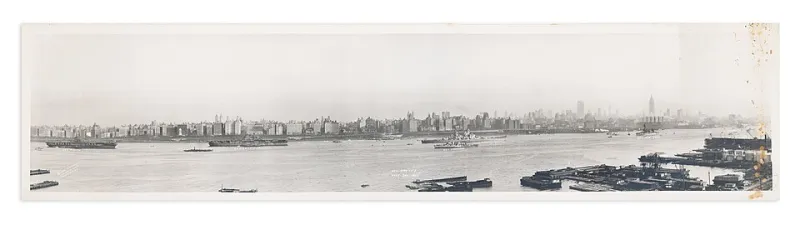
Photo: Tom Blackmore, Public domain, via Wikimedia Commons
New York City has never been a passive backdrop. Its elevated trains, crowded tenements, and gilded concert halls have pressed themselves into the consciousness of every artist who has ever tried to sleep through its noise or draw meaning from its relentless momentum. For the composers who built the American classical tradition, the city was not merely where they lived—it was, in a very real sense, what they composed.
To walk certain blocks of Manhattan today is to move through a kind of invisible score. The landmarks remain, even when the music they inspired has long since migrated to the concert stage. For members of the NY Classical Club and lovers of the American repertoire, tracing these addresses offers something richer than a historical tour. It offers a new way of listening.
Harlem and the Making of Aaron Copland
Aaron Copland arrived in New York in the early 1920s after his formative years of study in Paris, and he settled into the cultural ferment of a city remaking itself. His early years were spent partly in the vicinity of the West Side and, crucially, in regular attendance at the jazz clubs and dance halls of Harlem. The neighborhood's polyrhythmic energy—its layering of African American musical traditions with European harmonic structures—left a discernible mark on Copland's evolving language.
His Piano Variations of 1930, often cited as a turning point toward a distinctly American modernism, carry within them the percussive urgency of a city that never quite settled into silence. Later, his apartment at the Empire Hotel on West 63rd Street became a gathering point for younger composers seeking guidance. Standing at that corner today, within walking distance of Lincoln Center, one appreciates the geographic irony: the man who helped define American concert music lived a short walk from the campus that would eventually become its institutional home.
The Village and the Radical Tradition
Greenwich Village has sheltered dissenters of every variety, and the composers who gravitated there in the mid-twentieth century were no different. Edgard Varèse, the French-born iconoclast who became one of New York's most consequential musical citizens, lived for decades on Sullivan Street in a modest apartment that became something of a shrine to the avant-garde. His 1954 work Déserts was, by his own account, shaped by his experience of the city's industrial soundscape—the grinding machinery, the pneumatic drills, the distant horns of vessels on the Hudson.
The Village also nurtured the early careers of composers drawn to the intersection of classical rigor and folk idiom. Walking through Washington Square Park on a spring afternoon, one can almost reconstruct the informal concerts and heated arguments about tonality that animated the neighborhood's musical culture for decades. The park itself functioned as an open-air salon, a democratic counterpoint to the formal institutions uptown.
Philip Glass and the TriBeCa Studio
Few figures have shaped the perception of New York as a laboratory for classical innovation more than Philip Glass. His long association with TriBeCa—then an industrial district of warehouses and loading docks, now considerably gentrified—is inseparable from the austere, repetitive architecture of his early minimalist works. Glass has spoken openly about how the visual geometry of cast-iron facades and the rhythmic patterns of factory work influenced his compositional thinking during the period when he was developing the language that would define Music in Twelve Parts and, later, Einstein on the Beach.
His loft on the western edge of TriBeCa was not merely a residence but a working studio where the Philip Glass Ensemble rehearsed before performances at downtown venues. The neighborhood's warehouse aesthetic—its long horizontal lines, its unadorned surfaces—finds a clear acoustic analogue in music that prizes repetition and gradual transformation over dramatic gesture. To walk those blocks while listening to Glassworks is to understand, with unusual clarity, how environment and imagination collaborate.
Carnegie Hall and the Weight of Expectation
No examination of Manhattan's musical geography can avoid Carnegie Hall. Opened in 1891 on Seventh Avenue and 57th Street, it has functioned as both a destination and a pressure point for American composers navigating the tension between European prestige and native expression. Leonard Bernstein, who conducted and composed with equal brilliance, understood Carnegie as a site of negotiation—a place where American music had to prove itself against the accumulated authority of the European canon.
Bernstein's Symphony No. 2, The Age of Anxiety, premiered in 1949 by the Boston Symphony Orchestra, was shaped in part by his experience of New York at the close of the Second World War: its exhaustion, its restless optimism, and its peculiar capacity for solitude within a crowd. The symphony's title derives from W.H. Auden's New York-written poem, and the work's emotional register—anxious, searching, occasionally euphoric—mirrors the city's own postwar mood with uncanny fidelity.
The Upper West Side: A Neighborhood That Listened
The stretch of Broadway between 72nd and 96th Streets has housed more classical musicians per square block than perhaps any comparable urban corridor in America. The Ansonia Hotel, a baroque confection at Broadway and 73rd, was home at various points to Enrico Caruso, Igor Stravinsky, and Florenz Ziegfeld. Its thick walls and generous dimensions made it a sanctuary for artists who required both space and acoustical tolerance from their neighbors.
Stravinsky's New York years—he became an American citizen in 1945—coincided with some of his most searching late work, including the serial compositions that surprised and occasionally dismayed admirers of his earlier style. The city's cultural pluralism, its willingness to absorb contradiction, seems to have given him permission to keep reinventing himself well into his eighties.
Listening With New Ears
For those who attend concerts at venues across Manhattan, this geography offers a rewarding supplement to the experience of the music itself. The next time you settle into your seat for a program of American works, consider the streets those composers walked, the buildings they inhabited, the particular quality of light on the Hudson that may have informed a harmonic choice or a rhythmic decision made in a room very much like the ones that still stand.
New York has always composed alongside its artists. The city's contribution to the American classical tradition is not merely institutional—it is structural, embedded in the very intervals and textures of the music we cherish. To know the city is, in some measure, to know the music more deeply.