Pages and Podiums: The Literary Lives That Shape New York's Greatest Conductors
Photo: Uklonwripar333, CC BY-SA 4.0, via Wikimedia Commons
There is a persistent image of the maestro as a creature entirely of sound — someone whose intellectual world begins and ends at the first measure and dissolves at the final bar. Spend any meaningful time in conversation with the conductors who shape New York's classical landscape, however, and that image collapses almost immediately. What emerges in its place is something far more interesting: a portrait of voracious, often surprising readers whose interpretive instincts are nourished by philosophy, biography, history, and even neuroscience.
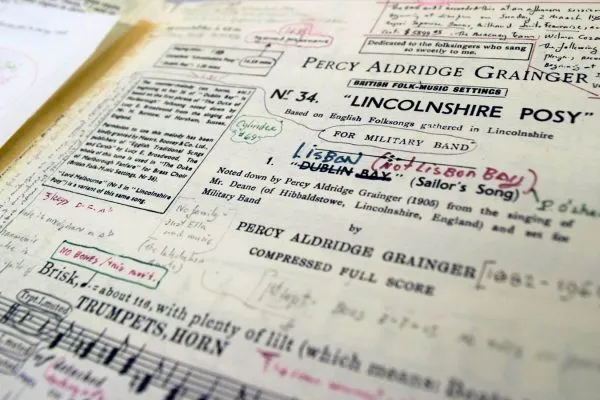
The connection between wide reading and authoritative conducting is not accidental. The score, after all, is not a self-explanatory document. It is a compressed artifact of human intention, historical circumstance, and compositional personality. To unlock it with any depth requires context — and context, for these musicians, arrives primarily through books.
The Philosopher's Score
For several of the conductors associated with New York's major ensembles, philosophical inquiry is not a peripheral hobby but a foundational practice. One prominent music director, who has led the orchestra through multiple Mahler cycles over the past decade, keeps a well-annotated copy of Arthur Schopenhauer's The World as Will and Representation on his desk alongside his conducting scores. He describes Schopenhauer's conception of music as the most direct expression of the will — bypassing representation entirely — as something that reframes every rehearsal. "When I'm working through a slow movement," he has noted in conversation, "I'm not asking what the music depicts. I'm asking what it is. Schopenhauer gives me permission to hold that question open."
Friedrich Nietzsche, predictably, appears on many of these shelves — though often in editions that show the marks of genuine wrestling rather than reverential display. The Birth of Tragedy, with its foundational tension between Apollonian structure and Dionysian impulse, functions for several conductors as a kind of perpetual diagnostic tool, a way of locating themselves and their ensembles on a spectrum between formal clarity and emotional abandon.
Less predictable is the frequency with which Ludwig Wittgenstein surfaces in these conversations. The Philosophical Investigations, with its meditations on the limits of language and the nature of rule-following, holds particular appeal for conductors who spend their professional lives trying to communicate something that resists verbal articulation. As one chamber orchestra director put it, Wittgenstein "taught me to stop explaining and start demonstrating — which is, when you think about it, exactly what conducting is."
Biography as Master Class
If philosophy provides the conceptual architecture, biography supplies the human texture. Nearly every conductor interviewed for this piece named at least one composer biography as a persistent companion — a book returned to at different stages of life and found to yield different meanings each time.
Marc Vignal's writings on Haydn, Maynard Solomon's landmark study of Beethoven, and Jan Swafford's sweeping biography of Brahms all appear with notable regularity. What conductors seem to seek in these volumes is not simply factual grounding but something closer to imaginative proximity — a felt sense of the person behind the notation.
One conductor who has made a specialty of the late Romantic repertoire described reading Swafford's Brahms during a period of preparation for the Fourth Symphony, and finding that a single passage about Brahms's relationship to loss and incompletion reoriented his entire approach to the finale. "It wasn't a musicological insight," he said. "It was a human one. And that's what I needed."
Biographies of non-composers also make regular appearances. Conductors speak of returning to Robert Caro's volumes on Lyndon Johnson — not for their political content but for Caro's sustained inquiry into the nature of power, preparation, and the exercise of institutional authority. The parallels to orchestral leadership, they suggest, are more than incidental.
The Unexpected Shelf
Perhaps the most revealing aspect of these literary lives is what appears when the conversation moves beyond the obvious. The conductors who lead New York's ensembles are, almost without exception, readers of startling range.
Cognitive science has become a particular preoccupation in recent years. Daniel Levitin's This Is Your Brain on Music is frequently mentioned, though with the critical distance of practitioners who recognize both its insights and its limitations. More technically demanding works — including studies in auditory perception and memory formation — have found their way into the collections of conductors who want to understand, at a neurological level, what is actually happening in the minds of their audiences.
Literature, too, plays a formative role that goes largely unremarked in public discourse about classical music. Several conductors cite novelists as among their most important artistic influences. Proust appears with almost comic frequency — the Recherche as an inexhaustible meditation on memory, time, and the way musical experience anchors identity across a lifetime. Thomas Mann's Doctor Faustus, with its fictionalized portrait of a composer's creative and moral dissolution, is described by one conductor as "the most honest account of what artistic ambition actually costs that I have ever read."
Anton Chekhov is another recurring presence, particularly among conductors who work extensively with chamber repertoire. The compression of Chekhov's dramatic technique — the way enormous emotional weight is carried by the most restrained gestures — is cited as a direct influence on interpretive pacing and the management of silence.
Reading as Rehearsal
What unites these disparate reading lives is a shared understanding of intellectual preparation as inseparable from musical preparation. For New York's leading conductors, the hours spent with a book are not stolen from the work — they are part of it.
This perspective has practical consequences for how these musicians approach programming, communication with their ensembles, and engagement with audiences. A conductor who has read deeply in the philosophical literature surrounding a composer's era brings a different kind of authority to pre-concert remarks than one who has confined preparation to the score alone. An interpreter shaped by biography and literature hears different things in the music — and, by extension, enables audiences to hear differently as well.
New York's classical tradition has always been nourished by the intellectual energy of the city itself — its libraries, its universities, its culture of perpetual argument and inquiry. It is fitting, then, that the musicians who stand at the center of that tradition should be, at their core, committed readers: people who understand that the deepest engagement with music begins, paradoxically, in silence, on the page.