Ink, Intuition, and the Podium: Inside the Private Archives of New York's Legendary Conductors
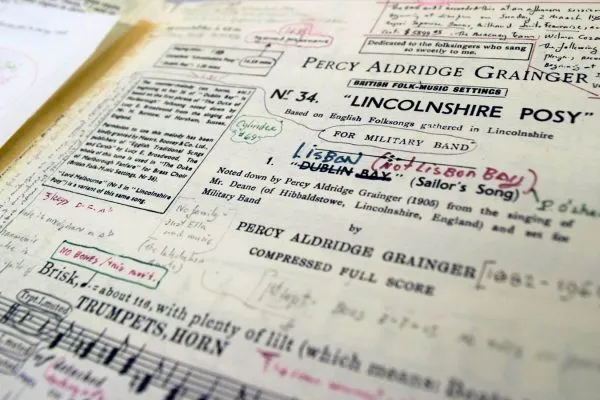
Photo: conductor annotated musical score pencil markings archive library, via www.esm.rochester.edu
The rehearsal is over. The audience has gone home. The ovation has faded into the particular silence that only a great concert hall can produce. And yet, in climate-controlled rooms tucked inside university libraries, institutional vaults, and private foundations across New York City, the real work of those performances endures — preserved in pencil marks, margin annotations, and letters that conductors never intended for public consumption.
These are the working documents of interpretation: the conductor's notebook, the annotated score, the personal correspondence fired off between a maestro and a composer, a soloist, or a doubting board of trustees. For those who study them, they represent something closer to a confession than a credential.
"A score with a conductor's markings is not a finished object," says Dr. Margaret Holloway, a music historian affiliated with the New York Public Library for the Performing Arts at Lincoln Center. "It is an argument in progress. You are watching someone negotiate with a dead composer in real time."
What the Margins Reveal
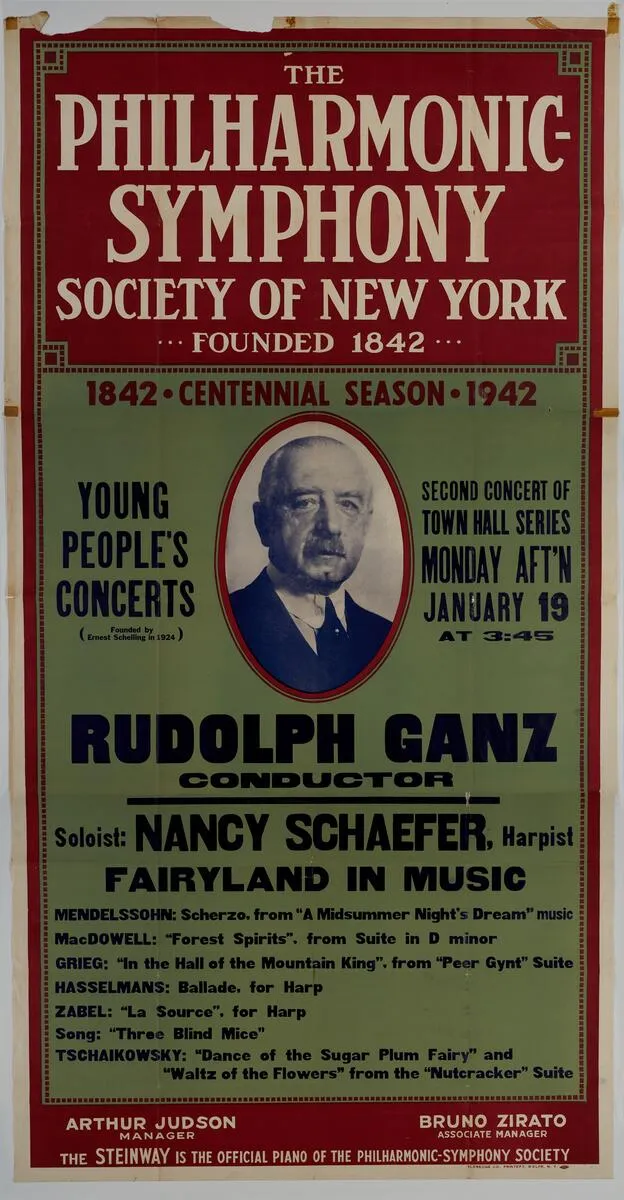
Among the most studied collections in New York is the archive of Leonard Bernstein, portions of which are held at the Library of Congress but whose New York-specific materials — correspondence with the Philharmonic, annotated rehearsal scores from his tenure as Music Director, and personal notes from his celebrated Young People's Concerts — have been carefully examined by scholars at institutions across the city.
What strikes researchers most is not the grandeur of Bernstein's notations but their anxiety. Tempo markings crossed out and reinstated. Dynamic instructions underlined, then questioned with a penciled exclamation point. In one frequently cited rehearsal score for Mahler's Ninth Symphony, a passage in the final Adagio carries a single word written in the margin: Why? Whether this was a question posed to himself, to Mahler, or to the universe remains, deliberately, unanswered.
"These marks tell you that certainty was never the starting point," says James Rutherford, a curator who has worked extensively with orchestral archives in the city. "The conductors we mythologize as visionaries were, in their private moments, deeply uncertain people trying to solve problems that had no single correct answer."
The Letter as Artistic Document
Beyond the scores themselves, private correspondence has proven equally revelatory. The letters exchanged between conductors and composers — many of whom lived and worked in New York during the mid-twentieth century — reveal a creative dialogue that performances alone could never fully communicate.
George Szell, who maintained a close professional relationship with the New York Philharmonic even while leading the Cleveland Orchestra to international prominence, was a notably prolific correspondent. His letters, characterized by a precision that bordered on severity, often contained specific requests to composers regarding tempos, articulation, and even the placement of rests. To read them is to understand that what audiences experienced as spontaneous inspiration was, in many cases, the product of exhaustive negotiation conducted weeks or months in advance.
By contrast, the correspondence of Bruno Walter — who conducted at Carnegie Hall well into his later years — tends toward the philosophical. Walter was less interested in debating eighth-note values than in articulating the spiritual responsibility he believed conductors carried toward their audiences. "We do not merely transmit music," he wrote in a letter to a young colleague, a copy of which has circulated among New York music historians for decades. "We are obligated to make it matter."
The Rehearsal Studio as Laboratory
For those who have had the privilege of examining these materials firsthand, one of the most surprising revelations is how much interpretive decision-making occurred not on the podium but in the quiet hours before any orchestra assembled.
Dr. Holloway describes sitting with a rehearsal score used by Dimitri Mitropoulos during his tenure as Music Director of the New York Philharmonic in the 1950s. The score — a Shostakovich symphony performed at a moment of considerable political tension — was covered in color-coded annotations that Mitropoulos used to track not only musical dynamics but what he termed, in his own shorthand, "emotional architecture."
"He was mapping the emotional journey of the piece before a single musician walked into the room," Holloway explains. "He knew exactly where he wanted to create tension, where he wanted release, and how long he could sustain discomfort before the audience needed resolution. It was architectural thinking applied to sound."
This kind of pre-rehearsal preparation is, curators note, increasingly rare in an era of compressed schedules and guest conducting arrangements. The extended tenures that allowed figures like Mitropoulos, Bernstein, and later Zubin Mehta to develop deep institutional relationships — and to fill notebooks over years rather than weeks — belong to a professional culture that has substantially changed.
Preserving the Unguarded Moment
The challenge facing institutions that hold these collections is not merely archival but interpretive. A penciled marking in a score is mute without context. A letter is incomplete without its reply. And a conductor's private notation system — often idiosyncratic to the point of inscrutability — demands a kind of scholarly detective work that few institutions have the resources to undertake systematically.
The New York Public Library for the Performing Arts remains one of the premier institutions in the country for this kind of work, its holdings spanning not only scores and correspondence but photographs, audio recordings, and even costume sketches that illuminate the full theatrical context of performances. The library's reading room has welcomed generations of researchers seeking to understand how the decisions made in quiet rooms became the defining cultural moments of New York's musical life.
Private collectors have also played a significant role in preserving materials that might otherwise have been dispersed or lost. Several New York-based patrons — some affiliated with institutions like NY Classical Club — have quietly acquired annotated scores and correspondence at auction, subsequently donating or lending them to research collections where they can be properly studied.
"The market for this material has grown considerably," notes Rutherford. "There is a recognition, particularly among serious collectors and patrons, that these objects are not merely memorabilia. They are primary documents of an artistic tradition."
What We Owe the Notebooks
To spend time with these archives is to be reminded that the classical tradition, for all its formal grandeur, is fundamentally a human enterprise — sustained by individuals who doubted themselves, argued with their predecessors, and spent sleepless nights wondering whether they had found the right tempo for the second movement.
The performances that New Yorkers remember — the Bernstein Mahler cycles, the Mitropoulos Shostakovich premieres, the Walter late-career Brahms evenings at Carnegie — did not arrive fully formed from some realm of pure artistic inspiration. They were built, note by note, in the margins of scores that still exist, still carry the pressure of a pencil held by a hand that is no longer here.
For anyone who has ever sat in a darkened hall and felt that a conductor was communicating something almost unbearably personal, the archives offer a kind of answer. That feeling was not accidental. It was, in every sense, the plan.
The New York Public Library for the Performing Arts at Lincoln Center is open to researchers by appointment. Information regarding archival access is available through the library's official website.