Hands on Shoulders, Bows in Hand: Inside the Studios Where New York's Pedagogues Shape the Next Century of Music
The Longest Conversation in Music
Every classical performance you have ever heard is, in a sense, a quotation. The vibrato a violinist learned at sixteen was taught by a teacher who inherited it from a teacher before her — a lineage that, in some studios, can be traced back through the great conservatories of Moscow, Paris, and Vienna to the nineteenth century itself. Nowhere in America is that chain more concentrated than in New York, where a handful of city blocks hold more pedagogical lineage per square mile than perhaps any place on earth.
This season, we were granted access to several of those studios — at Juilliard, at Mannes, and in the modest private teaching rooms scattered along the Upper West Side — to understand how the torch is actually passed. What we found was less a transfer of information than a sustained, years-long conversation between generations.
The Studio as Sanctuary
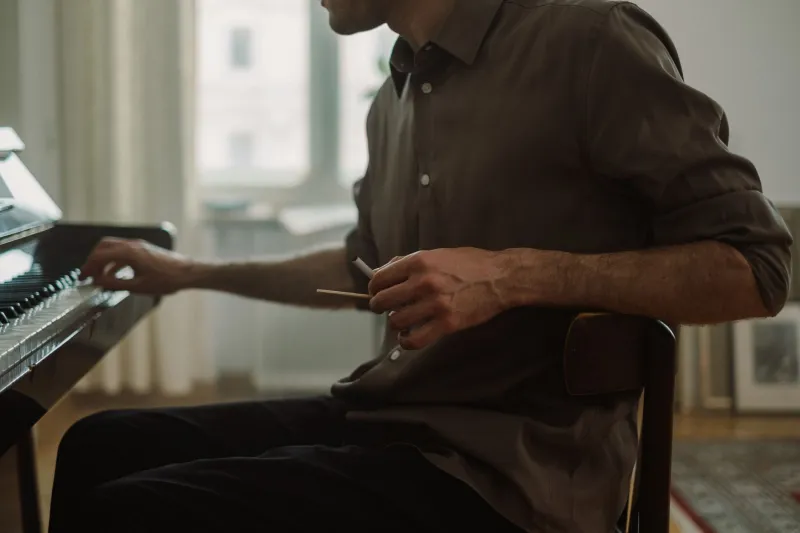
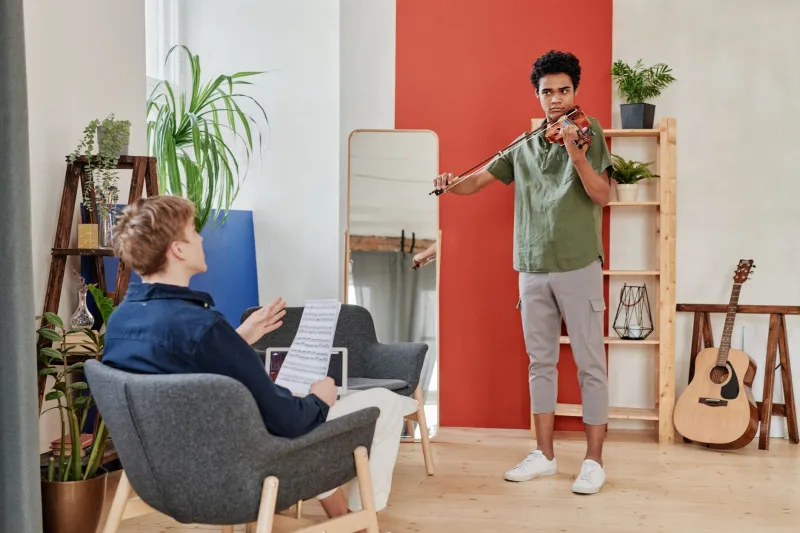
The weekly lesson remains the most intimate ritual in classical music. There is no audience, no recording, no orchestra to hide within — only a teacher, a student, and the honest accounting of a single phrase.
At Juilliard, one veteran viola professor describes the lesson as "the only place in this business where you are permitted to fail out loud." His studio, cluttered with marked-up etude books and decades of student recital programs, functions as both workshop and archive. He estimates he has taught more than two hundred students; he can name the defining flaw of each.
That intimacy is the pedagogical method. Unlike conservatory coursework, the studio tradition resists standardization. Each teacher builds a private vocabulary — metaphors for bow speed, for breath, for the weight of the arm — that students carry forward and, eventually, translate for their own pupils.
Lineage and Its Discontents
For generations, the pedigree of one's teacher functioned as a kind of professional currency. Program bios still announce lineage with the pride of a coat of arms: a student of so-and-so, who studied with the great so-and-so.
But today's students arrive with different expectations. Many question the authoritarian model — the legendary shouting maestro — that shaped earlier eras. Several younger teachers we spoke with describe a deliberate shift toward what one Mannes faculty member calls "curiosity over fear." Technique is still demanded, she insists, but the rationale is explained rather than imposed. Students are encouraged to interrogate the tradition, not merely absorb it.
The result is not a rupture but a negotiation. Old-lineage teachers concede that their best students now arrive having studied multiple interpretive traditions online, having heard dozens of recordings of any given concerto before touching the score. The teacher's role has shifted from gatekeeper to editor.
Rivalry as Inheritance
It would be sentimental to pretend the studios are pure harmony. New York's teaching culture is threaded with rivalry — between institutions, between studios competing for the strongest applicants, and between pedagogical philosophies that trace back decades.
Teachers at rival conservatories speak of one another with the wary respect of coaches in the same conference. Students, meanwhile, quietly compare lessons the way athletes compare training regimens. This friction, several faculty members argue, is productive. It keeps the tradition honest. A method that survives scrutiny in this city, one pianist-teacher noted, can survive anywhere.
The Torch, Refashioned
What does the next generation carry forward? The core remains astonishingly stable: the scale books, the etudes, the insistence that technique serves expression rather than replaces it. What has changed is the frame around it.
Younger teachers are expanding the repertoire their studios consider canonical, commissioning new works for their students, and treating historically excluded composers not as enrichment but as essential study. Several have built thriving teaching practices online, extending the lineage to students far beyond the five boroughs — a development that would have been unimaginable to their own mentors.
Yet the heart of the tradition remains stubbornly analog. It happens in a small room, once a week, when a teacher leans over a music stand and says, simply: again, and this time, listen.
For the sophisticated listener, understanding this hidden economy of instruction adds a rich layer to every concert attended in this city. Behind every promising debut stands an unmarked studio, a marked-up score, and a lineage that shows no sign of ending.
The NY Classical Club will host a panel on pedagogical lineage featuring faculty from several New York conservatories later this season. Members receive priority seating.