When the City Sleeps, the Strings Awake: Inside New York's After-Hours Classical Scene
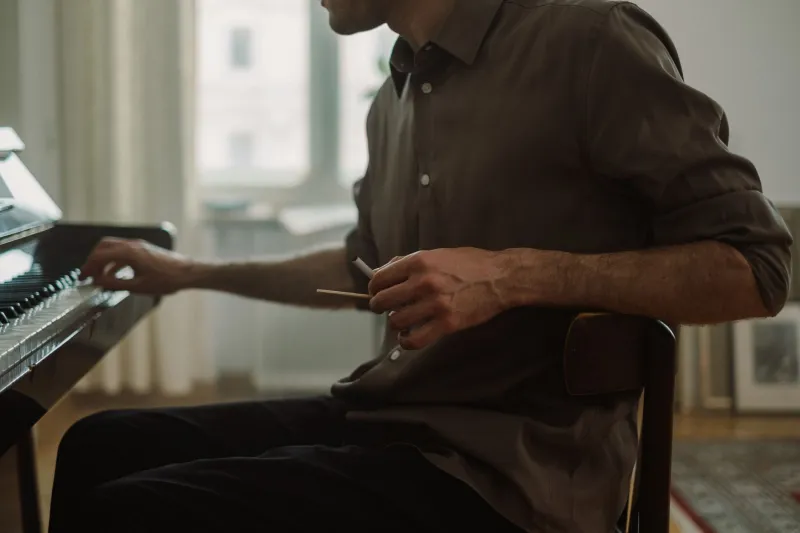
At 1:47 a.m. on a Tuesday, the offices of Midtown have emptied, the theaters of Broadway have gone dark, and yet somewhere in a Brooklyn walk-up, a nurse finishing a night shift is listening to a pianist play Satie as though the fate of the republic depended on the softness of her pedaling. This is the other classical music economy of New York — the one that begins when the rest of the cultural calendar ends.
The Radio Hour No One Advertises
For decades, the small hours have belonged to the overnight classical announcer. Stations like WQXR and its public-radio cousins across the country have long programmed ambient, contemplative repertoire between midnight and dawn, a tradition born partly of budget and partly of wisdom: the sleepless need music that does not demand, only accompanies.
Programmers speak of this repertoire in hushed, almost apologetic terms — the slow movements, the nocturnes, the adagios. But there is nothing apologetic about its function. A Fauré Pavane at 3 a.m. is not filler. It is companionship for the delivery driver, the new parent, the anxious insomniac staring at a ceiling on the Upper West Side.
Recitals by Lamplight
A newer phenomenon is less passive. A handful of presenters and enterprising young ensembles have begun scheduling performances that begin when conventional concerts conclude — ten o'clock starts, late-night salon programs, even post-midnight chamber evenings in loft spaces and church chapels.
The logic is partly practical. Musicians, whose own evenings end at the stage door, are among the city's most reliable night owls. Audiences of service-industry workers, hospital staff, and artists keep similarly inverted hours. A late recital meets them where their circadian rhythms already live.
It is also partly aesthetic. There is a particular intimacy to hearing a Schubert Impromptu at midnight — the city's ambient noise softened, the listener's defenses lowered. Performers report that late audiences are the most attentive they ever face, stripped of the social performance that accompanies an eight o'clock subscription crowd.
The Algorithmic Nocturne
Streaming platforms have formalized what radio intuited. Playlists built around sleep, focus, and late-night calm have become among the most consumed classical music in America, funneling millions of listeners toward Chopin, Debussy, and Max Richter's recomposed Vivaldi without a single program note or ticket surcharge.
Purists may bristle at the flattening of repertoire into mood boards. But the numbers tell a more interesting story: these listeners do not remain passive. Streaming data suggests that a meaningful share of late-night ambient listeners migrate toward full works, complete operas, and artist pages within months. The nocturne, it turns out, is a gateway.
What the Small Hours Reveal
There is a lesson here for institutions that measure success by seats filled at seven-thirty. The classical tradition has always assumed an audience with leisure, evening attire, and an early bedtime. Modern New York — a city of shift workers, strivers, and chronic sleeplessness — fits that profile less every year.
The after-hours audience is not a curiosity. It is a demonstration that the appetite for this music is elastic, and that the concert's conventional shape is a choice, not a law of nature. A city that never sleeps deserves an art form willing to stay up with it.
The Club will be watching this scene closely — and, on occasion, attending in pajamas.