The Art of Stillness: Why New York's Orchestras Are Treating Silence as a Instrument
The Art of Stillness: Why New York's Orchestras Are Treating Silence as an Instrument
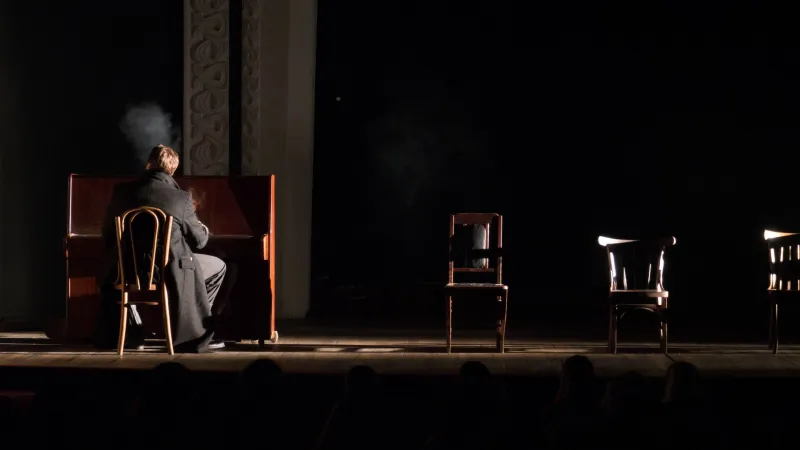
There is a moment near the close of the second movement of Beethoven's Seventh Symphony when the music seems to hold its breath. The strings thin to a whisper, the harmony suspends, and then — nothing. A beat of pure silence before the phrase resolves. In lesser hands, that pause is merely a gap. In the hands of a conductor who understands its weight, it becomes the emotional center of the entire performance.
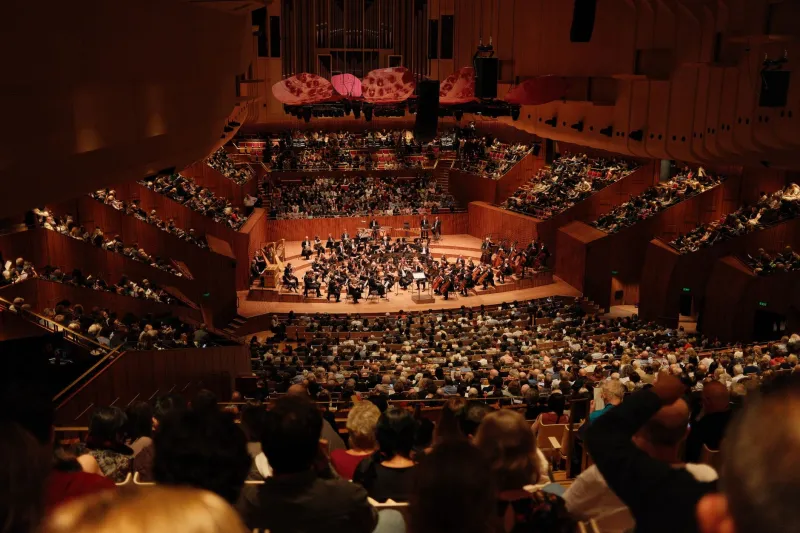
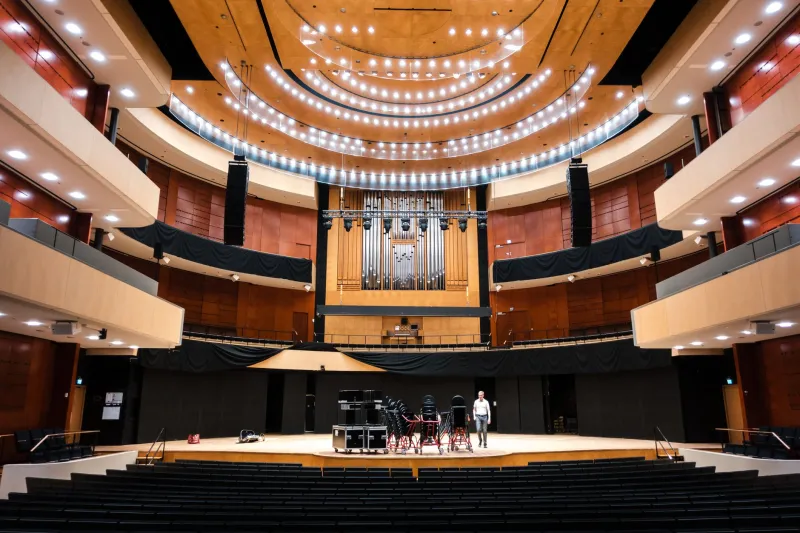
Across New York's great stages — from the polished expanse of David Geffen Hall to the warm intimacy of Alice Tully Hall at Lincoln Center, from Carnegie Hall's storied main stage to the Brooklyn Academy of Music's Howard Gilman Opera House — a quiet but consequential conversation is taking place among musicians, conductors, and the audiences who follow them. The subject is not notes. It is the space between them.
Rethinking the Architecture of Sound
For much of the twentieth century, the dominant aesthetic in American orchestral performance favored propulsion. Conductors were celebrated for their energy, their sweep, their ability to carry an audience forward on a wave of sound. Speed and power were proxies for vitality. Silence, by contrast, was something to be crossed quickly — a threshold between one passage and the next, not a destination in itself.
That calculus is shifting. A growing number of New York's most thoughtful interpreters are approaching silence not as absence but as presence — a force with its own texture, duration, and expressive capacity. The pause after a fortissimo chord does not merely allow the sound to decay; it asks the listener to sit inside that decay, to feel its weight, to anticipate what follows. In this view, the architecture of a performance is built as much from stillness as from activity.
This is not an entirely new idea — the great conductors of the mid-century, from Bruno Walter to Carlos Kleiber, understood it instinctively — but it is being applied with fresh intentionality by a generation of musicians who came of age in an era of relentless stimulation. For them, the decision to slow down, to breathe, to resist the pull toward the next phrase is itself a kind of artistic statement.
What Musicians Are Saying
Speak with players from any of New York's major ensembles and a consistent theme emerges: the most memorable performances are rarely the fastest or the loudest. They are the ones in which time itself seems to bend — where a single held note or a carefully weighted rest communicates something that no volume of sound could achieve.
Principal musicians describe rehearsals in which conductors will stop the ensemble not because a passage was played incorrectly, but because it was played too quickly — because the silence at the end of a phrase was not allowed to settle before the next idea arrived. The instruction is not technical. It is perceptual. Let the audience hear the quiet. Give them a moment to feel what just happened before you tell them what comes next.
This approach demands a particular kind of discipline. For performers trained to maintain momentum, to project confidence through forward motion, the willingness to pause — to trust that stillness will hold an audience rather than lose them — requires a recalibration of instinct. It is, in some respects, the more difficult skill.
The Conductor's Hand in the Void
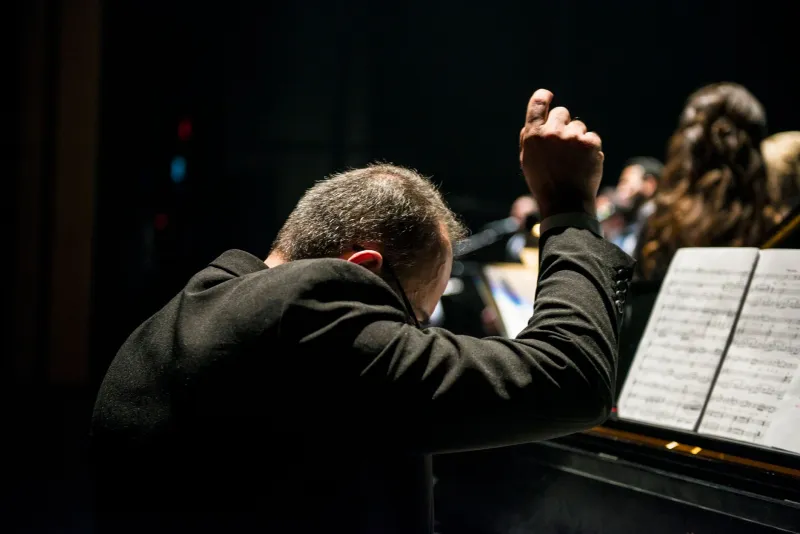
The conductor's role in shaping silence is both literal and interpretive. A baton held motionless in the air communicates to the ensemble that the sound, however faint, is still being held. A fractional delay before a downbeat can transform a routine transition into a moment of genuine suspense. These are not accidents. They are choices — and the finest conductors make them with the same deliberateness they bring to any other aspect of the score.
In recent seasons, New York audiences have had ample opportunity to observe this craft in action. Guest conductors of international standing have brought markedly different relationships with silence to the same repertoire, and the contrast has been instructive. A Bruckner symphony conducted with generous pauses between movements — pauses that honor the music's vast, cathedral-like spaces — produces a fundamentally different listening experience than the same work conducted with efficient, businesslike transitions. Neither approach is wrong, but they are not equivalent. They make different arguments about what the music means.
Teaching Audiences to Listen Differently
Perhaps the most significant aspect of this conversation is what it asks of audiences. Concert hall etiquette has long governed when listeners may and may not make noise, but it has said relatively little about how they might engage with silence when it arrives. The instinct to cough, to shift in one's seat, to check a program — these impulses tend to surface precisely in the moments of greatest stillness, when the music withdraws and the room becomes aware of itself.
Some of New York's more adventurous presenters are beginning to address this directly, not through scolding but through education. Pre-concert talks and program notes that draw attention to specific moments of silence in an evening's repertoire invite audiences to prepare for those moments rather than be caught off guard by them. The effect, for listeners who take the invitation seriously, can be transformative. A pause that might have registered as a lull becomes an event — something to be anticipated, inhabited, and remembered.
This is, in essence, an argument for a more active form of listening. The classical tradition has always demanded attention, but attention to silence is a different skill than attention to melody or harmony. It requires the listener to resist the habit of waiting for something to happen and to accept, however briefly, that nothing happening is what is happening.
The Emotional Case for Restraint
There is a deeper argument here, one that touches on the emotional purpose of live performance. Music, at its most powerful, does not simply deliver feeling — it creates the conditions in which feeling can arise. And feeling, as any honest listener will acknowledge, tends to emerge not in the midst of sound but in its wake. The sob that catches in the throat, the sudden awareness that one's eyes are wet — these responses do not arrive during the climax. They arrive in the silence after it.
New York's orchestras, at their finest, understand this. The most affecting performances at Carnegie or Geffen Hall in recent memory are not the ones that ended in triumph but the ones that ended in stillness — where the final note faded into a silence so complete and so collectively held that no one in the hall dared break it. Those seconds, before the applause begins, are among the most powerful experiences live music can offer.
To cultivate them requires courage from conductors, discipline from musicians, and a willingness from audiences to meet the music on its own terms. It requires, in short, the recognition that in a world saturated with noise, the most radical thing an orchestra can do is stop — and trust that the quiet will speak for itself.