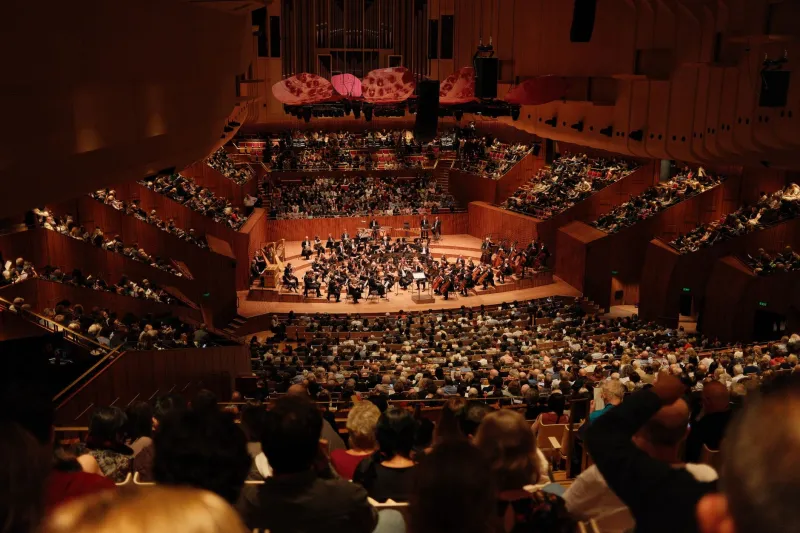
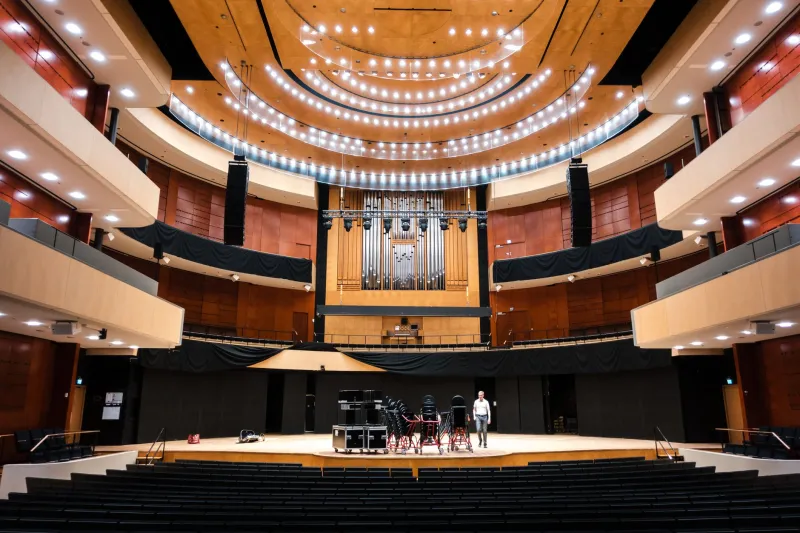
The Virtue of the Wrong Note: Why New York's Finest Performers Are Embracing the Unpolished Truth
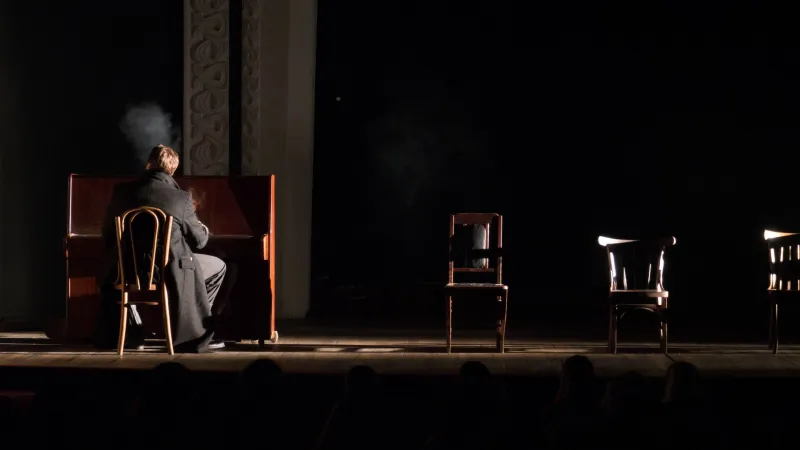
For decades, the classical recording industry operated on a single, unspoken commandment: eliminate the error. Every breath, every wayward bow stroke, every infinitesimal lapse in intonation was subject to the editorial scalpel. The result was a catalogue of recordings so technically immaculate that they began, quietly and almost imperceptibly, to resemble something other than music. They resembled sculpture — beautiful, permanent, and cold.
Now, in concert halls and recording studios across New York City, a different philosophy is asserting itself. Pianists, string quartets, and conductors are making a deliberate and, in some cases, provocative choice: to leave the human evidence intact.
The Streaming Paradox
The timing of this shift is not incidental. The rise of streaming platforms has democratized access to classical music in ways that would have been unimaginable to previous generations, placing the entirety of the recorded canon at the fingertips of any listener with a subscription. Yet this abundance has produced an unexpected consequence. When every great performance of the Goldberg Variations is available simultaneously, the distinctions between them become both more subtle and more meaningful. Listeners, increasingly sophisticated and increasingly restless, have begun to notice that the most technically pristine recordings are not always the most compelling ones.
The Austrian pianist Artur Schnabel, who recorded the complete Beethoven sonatas in the 1930s, was notorious for his wrong notes. He reportedly dismissed the concern with characteristic bluntness, suggesting that the notes he omitted were no great loss, but the ones he added were inspired. That remark, long treated as an amusing eccentricity, is suddenly beginning to sound like a manifesto.
New York at the Vanguard
Several New York-based ensembles and soloists have, in recent seasons, made the philosophical underpinnings of their approach unusually explicit. Chamber groups performing at venues from the 92nd Street Y to smaller, more intimate spaces in Brooklyn and the West Village have spoken openly in program notes and pre-concert talks about their resistance to what one violinist described as "the tyranny of the clean take."
The argument is not a romantic rejection of craft. These are, without exception, musicians of formidable technical accomplishment. Rather, it is a contention that technical mastery, when deployed in the service of concealment rather than expression, produces a kind of aesthetic deception — a performance that sounds more like an ideal than an event.
Live recordings released with audible audience presence, the occasional page turn, even the creak of a piano bench have begun to appear with greater frequency on independent labels and artist-managed platforms. The impurities are not accidents. They are, their creators insist, the point.
The AI Accelerant
The emergence of artificial intelligence as a force within music production has sharpened this debate considerably. AI-assisted editing tools can now correct pitch, adjust timing, and smooth ensemble intonation with a precision that no human engineer could previously achieve. The results are, by any conventional metric, extraordinary. They are also, to a growing number of listeners and performers, deeply unsettling.
When a machine can reconstruct a performance note by note, the question of what constitutes a recording becomes genuinely philosophical. Is the document that emerges from such a process a record of what happened, or a record of what the software calculated should have happened? For performers who have spent years cultivating an individual voice — a distinctive vibrato, a characteristic approach to rubato, a way of shaping a phrase that is theirs alone — the prospect of algorithmic correction is not merely a technical concern. It is an existential one.
Several New York musicians have responded by releasing what might be called "integrity editions" of live performances: recordings explicitly produced without pitch correction or timing adjustment, documented as such in their liner notes. The gesture is partly artistic and partly political — a declaration that the human body, with all its variability and limitation, remains the instrument that matters most.
What Audiences Are Hearing Differently
Perhaps the most intriguing dimension of this movement is the response it has elicited from listeners. Pre-concert and post-concert conversations at New York venues have begun to reflect a perceptible shift in what audiences value and how they articulate that value. Words like "presence," "risk," and "honesty" appear with increasing frequency in the vocabulary of engaged concertgoers. The flawless has become, for some, a synonym for the forgettable.
This is not, it should be said, a universal sentiment. There remains a substantial and entirely legitimate audience for the polished studio recording, for the interpretive vision realized without compromise or interruption. The canon of great classical recordings is not diminished by the new conversation; it is complicated by it, which is precisely what a living art form requires.
But there is something significant in the observation that younger audiences — the listeners whose musical formation has coincided with the streaming era and its embarrassment of available perfection — often respond most viscerally to performances that carry the evidence of their own making. A slight unevenness in a passage. A moment of audible concentration before a difficult entry. The sound of a musician thinking, not merely executing.
The Deeper Question
Underlying all of this is a question that classical music has periodically been forced to confront throughout its history: what is a performance for? If it is primarily a vehicle for the transmission of a score — a means of delivering Brahms or Bartók to the listener as faithfully as possible — then perfection is a reasonable aspiration. Every deviation from the composer's intention is, by definition, a failure.
But if a performance is understood as an encounter — between a musician and a work, between a musician and an audience, between a human being and the full weight of a tradition — then imperfection is not merely tolerable. It may be essential. The encounter cannot be manufactured. It can only be risked.
New York's classical community has always been distinguished by its willingness to ask uncomfortable questions of itself. The current conversation about imperfection, authenticity, and the meaning of the recorded document is, in that respect, entirely in keeping with the city's character. It is a conversation worth having seriously, and at length, and in the concert hall — which is, after all, where these questions are ultimately answered.
The metronome may keep perfect time. But it has never, in the history of music, moved anyone to tears.