When the Music Stops, the Room Goes to Work: New York's Intermission as Commerce and Community
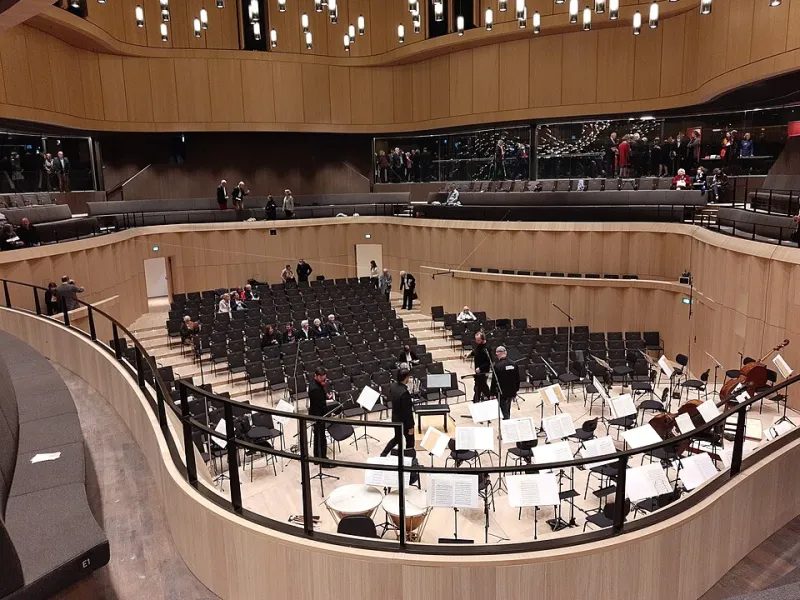
Photo: Gerda Arendt, CC BY-SA 4.0, via Wikimedia Commons
At 8:47 on a Saturday evening in October 2026, the final chord of the first half fades in a Lincoln Center hall. Two thousand listeners rise almost in unison. The performance is over for now; the intermission has begun. What follows is not a pause in the evening's logic but a second performance, played out in bars, lobbies, donor rooms, and restroom lines.
The Twenty-Minute Window
The standard intermission lasts twenty minutes, sometimes fifteen, occasionally twenty-five. In that window, an audience of two thousand must be moved, refreshed, and returned to its seats. The logistics are formidable. Bars open; pre-ordered drinks appear; ushers redirect foot traffic; coat check attendants brace for a surge. The hall's management has rehearsed this choreography as carefully as any stage cue.
For the listener, the break feels spontaneous. For the institution, it is a managed environment with revenue targets and social expectations.
The Bar as a Revenue Center
Intermission bars are among the most profitable square feet in a concert hall. A glass of wine, a cocktail, a small plate of nuts: the prices are set for convenience, not thrift. Pre-ordering has become common, allowing patrons to skip the line and collect a drink at a designated table. The system reduces congestion and increases sales.
In 2026, many New York halls have refined the model. Mobile ordering, limited menus, and express lanes for members have turned the intermission into a data-rich transaction. The audience is not merely buying a drink; it is signaling its relationship to the institution.
Donor Tables and the Geography of Access
Not all intermissions are equal. In donor lounges and patron rooms, the atmosphere is quieter, the seating more comfortable, the drinks complimentary. These spaces are part of the city's cultural hierarchy, a geography of access that maps onto giving levels and longstanding relationships. A donor table is a place to be seen, but it is also a place to do business—cultural, philanthropic, and sometimes commercial.
The intermission is when development officers make their rounds. A brief conversation about a planned gift, an introduction to a board member, a thank-you for a recent contribution: these exchanges are timed to the minute. The music may be the reason for the gathering, but the break is often the reason the gathering works.
The Restroom Line as Social Equalizer
The restroom line is the great leveler. Trustees and students, critics and subscribers, all wait in the same corridor. The line is a place of overheard opinions, chance encounters, and minor complaints. It is also a place where the evening's social boundaries relax. In a hall that can feel stratified, the queue is briefly democratic.
The Networking That Cannot Wait
For younger professionals and cultural workers, the intermission is prime time. A quick introduction, a business card, a follow-up scheduled by text: the break is short enough to feel urgent and long enough to be useful. In New York, where cultural life and professional life overlap, the intermission is a networking event with a dress code.
What the Break Reveals
When the lights flicker, the room reassembles. The second half begins, and the intermission recedes into memory. But the break has done its work: it has sold drinks, strengthened relationships, moved bodies, and reset attention. It has also revealed what the concert hall values—comfort, access, community, and the quiet commerce that sustains the art.
The next time the music stops, listen to the room. The intermission is not silence. It is the sound of an institution at work.