Beyond the Subscription Box: How New York's Classical Musicians Are Funding Their Own Futures
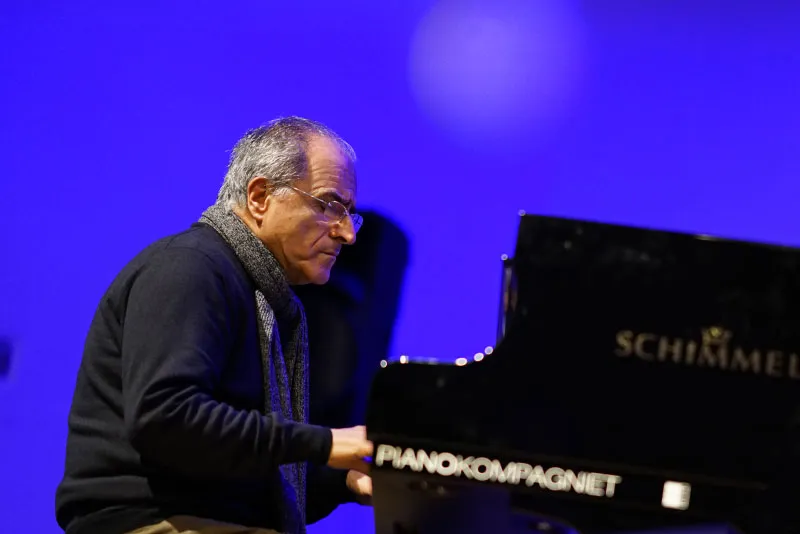
Photo: Hreinn Gudlaugsson, CC BY-SA 4.0, via Wikimedia Commons
For most of classical music's recorded history in America, the path to a sustainable career followed a well-worn route: secure an orchestral position, win a faculty appointment, cultivate a handful of generous patrons, and hope that the institutional structures supporting the art form remained solvent. That model produced extraordinary musicians and, at its best, extraordinary music. It also produced a profession in which artistic freedom was frequently subordinated to institutional priorities, and in which the distance between performer and audience was measured not merely in physical space but in layers of administrative intermediary.
Something has shifted. Quietly, and with increasing momentum, a cohort of New York-based classical performers and composers has begun building careers along a different set of lines — ones in which the digital economy is not an afterthought but a primary architecture.
The New Patrons
The word "patronage" carries historical weight. It conjures Medici princes and Viennese aristocrats, the kind of concentrated private wealth that funded Bach's cantatas and Haydn's symphonies. American classical music developed its own version of this system through the twentieth century: the philanthropic foundation, the endowed chair, the named concert hall. These structures remain important, and no serious observer of the field argues otherwise.
What has changed is the emergence of a distributed form of patronage — one in which hundreds or thousands of individual supporters, each contributing relatively modest sums, collectively provide the financial foundation that a single major donor once supplied alone. Platforms such as Patreon, Bandcamp, and Substack have made this model technically feasible. New York's musicians, characteristically entrepreneurial, have made it culturally viable.
Viola da gamba player and early music specialist Caroline Dowd, who performs regularly in New York's chamber music circuit, describes the shift in practical terms. "I have subscribers who receive monthly recordings, program notes, and occasional video content from me directly," she explains. "Some of them have been following my work for three years. They know my artistic interests more intimately than most concert presenters do. That relationship changes what I'm willing to attempt."
What Direct-to-Fan Means for Programming
The implications for artistic autonomy are significant. When a musician's income derives primarily from institutional engagements — orchestra positions, conservatory teaching, festival appearances — the programming choices available to that musician are constrained by institutional preferences. Unfamiliar repertoire, unconventional formats, and experimental collaborations are difficult to propose to a subscription audience that has been cultivated around the standard canon.
Direct-to-fan revenue changes this calculus. A composer who supplements her income through a subscriber base of committed listeners is less dependent on the approval of a single presenting organization. She can record and release a song cycle setting contemporary poetry without waiting for a label's interest. She can offer her subscribers an annotated score alongside a studio recording, creating a listening experience that no physical concert hall could replicate.
New York composer and pianist Marcus Ellerbe, whose work sits at the intersection of the American minimalist tradition and West African rhythmic structures, has leveraged precisely this freedom. "I released an album last year that I doubt any classical label would have taken on," he says. "It's forty-seven minutes of solo piano, very spare, very slow. My subscribers funded it through a crowdfunding campaign, and the response was more engaged than anything I'd received from a traditional release. People wrote to me about specific moments in specific tracks. That doesn't happen when you're three steps removed from your audience."
The Streaming Question
Streaming platforms present a more complicated picture. For classical music specifically, the economics of per-stream royalties are poorly suited to a repertoire characterized by long works, small listener volumes relative to popular genres, and recordings that reward repeated, attentive listening rather than passive consumption. A pianist whose recording of a Schubert sonata accumulates fifty thousand streams over a year will earn a sum that bears no meaningful relationship to the artistic labor invested.
Several New York musicians have responded by treating streaming platforms not as revenue sources but as discovery mechanisms — the equivalent of a calling card that directs interested listeners toward more economically viable relationships. A violinist might maintain a presence on Spotify and Apple Music while directing serious listeners toward a Bandcamp page where high-resolution downloads and exclusive recordings are available for direct purchase.
"Streaming is where people find you," says cellist and chamber musician Priya Anand, who performs frequently at New York venues ranging from Weill Recital Hall to intimate Brooklyn lofts. "It's not where you build a sustainable relationship with an audience. For that, you need something more direct — email, a newsletter, a subscription offering that gives people a reason to invest in your work specifically rather than in classical music as a category."
Institutional Structures and Their Limits
None of this is to suggest that New York's major institutions have become irrelevant. The Philharmonic, the Metropolitan Opera, Carnegie Hall, and the city's constellation of presenting organizations continue to provide platforms, resources, and audiences that no individual digital strategy can replicate. A debut at Weill Recital Hall still carries cultural weight that a successful Patreon campaign cannot substitute.
The more accurate picture is one of complementarity rather than replacement. The most resourceful musicians in New York's current landscape are those who navigate both worlds — securing institutional engagements that confer prestige and reach while simultaneously cultivating direct relationships with audiences that provide financial resilience and artistic latitude.
This dual strategy requires skills that conservatory training rarely addresses: marketing, audience communication, digital content production, financial planning. A number of New York's music schools have begun incorporating entrepreneurship coursework into their curricula, though the field as a whole is still catching up to the practical realities facing its graduates.
What This Means for the Listener
For the audience member, the rise of direct-to-fan classical music offers opportunities that the traditional concert model rarely provided. Following a musician through a newsletter or subscription platform grants access to the thinking behind the performance — the research, the interpretive debates, the compositional revisions — that a program note can only gesture toward.
It also creates a form of patronage that is available to a far broader range of people than the philanthropic model ever was. Supporting a New York musician's recording project for twenty dollars a month is a meaningful act of cultural stewardship, one that connects the listener directly to the creative process in ways that a charitable donation to a major institution cannot.
The classical tradition has always depended on the relationship between artist and patron. What is changing, in the digital age, is simply who gets to be the patron — and how directly that relationship can be felt on both sides of the transaction.