The Discerning Listener's Handbook: Building a Classical Music Collection That Will Last a Lifetime
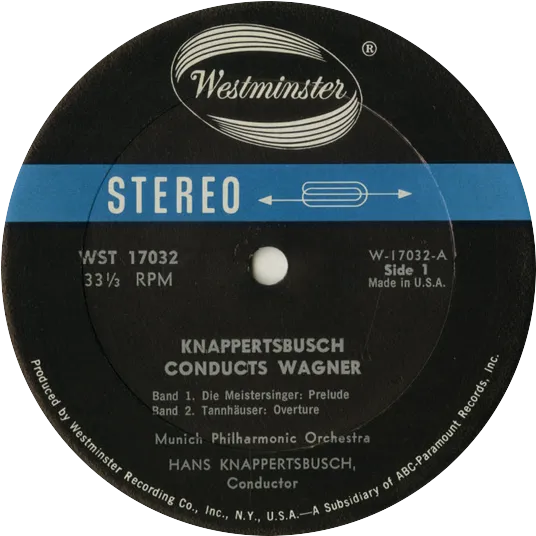
Photo: Unknown authorUnknown author, CC BY-SA 4.0, via Wikimedia Commons
There is a particular pleasure in owning music. Not merely accessing it, not streaming it on demand, but possessing it — as a physical object, a curated library, an expression of taste and intellectual curiosity accumulated over years. For classical music enthusiasts, this pleasure is amplified by the extraordinary richness of the recorded tradition, which now spans more than a century and encompasses thousands of interpretations of the same canonical works.
Yet that very richness presents a genuine challenge. Where does one begin? How does one choose between the forty-seven available recordings of Beethoven's Ninth Symphony, or the dozens of competing interpretations of Bach's Goldberg Variations? What format best serves the music, and what platforms merit a serious listener's subscription?
The following guide draws on conversations with New York-based collectors, professional musicians, and audio specialists to offer practical, opinionated answers to these questions.
Establishing Your Foundation: The Essential Recordings by Era
The Baroque Period (1600–1750)
No classical collection is complete without a substantial representation of the Baroque era, and no Baroque collection is complete without Johann Sebastian Bach. For the foundational works, consider the following benchmark recordings:
- Bach, Goldberg Variations: Glenn Gould's 1981 recording for CBS (now Sony Classical) remains the interpretive touchstone against which all others are measured. His 1955 debut recording of the same work offers a fascinating counterpoint — faster, more extroverted, and equally essential. Owning both is not redundant; it is instructive.
- Bach, The Well-Tempered Clavier: Angela Hewitt's recording for Hyperion is widely regarded as the finest modern survey of this monumental work. Her clarity of articulation and structural intelligence make it an ideal introduction.
- Handel, Messiah: The period-instrument recording conducted by John Eliot Gardiner for Philips Classics strikes the ideal balance between scholarly authenticity and expressive vitality.
- Vivaldi, The Four Seasons: Fabio Biondi's recording with Europa Galante for Opus 111 offers a revelatory alternative to more familiar versions, restoring the work's improvisatory energy.
The Classical Period (1750–1820)
Haydn, Mozart, and the early Beethoven define this era, and each presents its own collecting challenges.
- Haydn, String Quartets: The Kodály Quartet's complete survey for Naxos is both comprehensive and remarkably affordable — an ideal starting point before exploring more expensive alternatives.
- Mozart, Piano Concertos: Murray Perahia's recordings with the English Chamber Orchestra for CBS remain definitive for many listeners. Malcolm Bilson's fortepiano recordings with John Eliot Gardiner offer a stimulating period-instrument alternative.
- Beethoven, Piano Sonatas: Wilhelm Kempff's mono recordings for Deutsche Grammophon, made in the 1950s, represent one of the great interpretive achievements in recorded history. Alfred Brendel's later Philips cycle provides a more analytically rigorous complement.
- Mozart, Symphonies: Charles Mackerras conducting the Prague Chamber Orchestra for Telarc offers bracing, period-informed performances of the late symphonies in superb recorded sound.
The Romantic Period (1820–1900)
The Romantic era is where many collectors begin, and for good reason — its emotional directness and melodic abundance make it immediately accessible.
- Schubert, Winterreise: Hans Hotter's 1954 recording with Gerald Moore remains deeply affecting despite its age. Ian Bostridge's more recent account for EMI Classics brings a different kind of psychological intensity.
- Brahms, Piano Concertos: Emil Gilels with Eugen Jochum and the Berlin Philharmonic for Deutsche Grammophon is widely considered the finest recording of these works.
- Mahler, Symphonies: Leonard Bernstein's recordings with the New York Philharmonic for CBS carry particular significance for New York listeners and represent some of the most viscerally compelling Mahler on record.
- Tchaikovsky, Piano Concerto No. 1: Emil Gilels with Herbert von Karajan and the Berlin Philharmonic for Deutsche Grammophon sets a standard that few have approached.
The Twentieth Century and Beyond
- Bartók, String Quartets: The Emerson String Quartet's recording for Deutsche Grammophon is definitive in its technical precision and interpretive authority.
- Shostakovich, Symphonies: Mstislav Rostropovich conducting the National Symphony Orchestra for Teldec offers deeply personal, historically informed readings.
- Arvo Pärt, Tabula Rasa: The ECM recording with Gidon Kremer remains one of the most beautiful documents in the entire recorded catalog.
Choosing Your Format: Vinyl, CD, and High-Resolution Digital
The question of format is not merely technical — it is philosophical, and serious collectors hold strong opinions on the matter.
Vinyl
The resurgence of vinyl among classical enthusiasts is not pure nostalgia. A well-pressed LP, played on a quality turntable through a good phono stage, offers a warmth and spatial presence that many listeners find uniquely satisfying. The tactile ritual of removing a record from its sleeve, cleaning it, and placing the needle in the groove creates a quality of attention that streaming cannot replicate.
For classical music specifically, vinyl presents some practical challenges. Symphonic works often require multiple discs, and the dynamic range of a large orchestra can exceed what a standard LP groove accommodates without distortion. Chamber music and solo piano repertoire, however, can sound extraordinarily well on vinyl.
Recommended turntables for serious listeners: The Pro-Ject Debut Carbon EVO (approximately $500) represents an excellent entry point. For those willing to invest more substantially, the Rega Planar 3 (approximately $1,100) offers a significant step up in resolution and bass control.
Where to find classical vinyl in New York: Academy Records on West 18th Street maintains an excellent classical section with knowledgeable staff. Westsider Books and Records on the Upper West Side is another essential destination.
Compact Disc
Despite premature reports of its demise, the compact disc remains the most practical physical format for serious classical collectors. The format's dynamic range is superior to standard vinyl for large-scale orchestral works, and the back catalog available on CD is incomparably vast. Many of the benchmark recordings mentioned above are available on CD in excellent remastered editions at modest prices.
The SACD (Super Audio CD) format, which offers higher resolution than standard CD, is worth pursuing for listeners with compatible players. Labels such as Channel Classics, BIS, and Reference Recordings have released significant classical catalogs in this format.
High-Resolution Digital Audio
For those who prefer digital delivery without the compromises of standard streaming compression, high-resolution audio files — typically 24-bit/96kHz or higher — represent the current state of the art in home listening.
Recommended platforms for serious classical listeners:
- IDAGIO: Designed specifically for classical music, with a catalog organized by composer, work, and conductor rather than by album. The interface respects the structural logic of classical music in a way that general-purpose platforms do not. Premium subscription: approximately $10 per month.
- Qobuz: Offers a substantial high-resolution streaming catalog and the option to purchase and download high-resolution files for permanent ownership. The classical catalog is extensive and well-curated. Hi-Fi subscription: approximately $13 per month.
- Apple Music Classical: Apple's dedicated classical music application, launched in 2023, offers lossless audio quality and a vastly improved organizational structure compared to the main Apple Music application. Included with standard Apple Music subscription.
- Primephonic (now integrated into Apple Music Classical): Worth noting for its catalog contributions to the Apple ecosystem.
Advice from New York Collectors
"Begin with recordings that you love, not recordings that you feel you ought to love," advises Thomas Wren, a Manhattan-based attorney and collector of some thirty years whose library encompasses over four thousand CDs and several hundred LPs. "The canonical recordings are canonical for good reasons, but your collection should reflect your own developing taste, not a consensus."
Sophie Marchetti, a violinist with a New York chamber orchestra who has been collecting since her student days at Juilliard, offers a complementary perspective: "I always recommend that collectors seek out recordings by musicians they have heard perform live. There is a continuity between the concert experience and the recorded experience that deepens both."
Organizing and Caring for Your Collection
A collection without organization is merely an accumulation. Several cataloging applications are available to classical collectors, of which Discogs and the dedicated classical cataloging tool ClassicCat are the most widely used. For physical collections, storing CDs and LPs vertically, away from direct sunlight and heat sources, will preserve them indefinitely.
For vinyl care, a basic record cleaning kit — brush, cleaning solution, and anti-static sleeve replacements — represents a modest investment that will significantly extend the life of your records.
A Final Word
Building a classical music collection is not a project with a fixed endpoint. It is an ongoing conversation between the listener and the music, shaped by evolving taste, deepening knowledge, and the particular pleasures of discovery. The recordings recommended here are starting points, not destinations.
The most important quality a collector can cultivate is curiosity — the willingness to follow a conductor's name from one recording to another, to explore the discography of a beloved composer beyond the familiar masterworks, to seek out the unfamiliar alongside the canonical. That curiosity, sustained over years, is what transforms a collection into a library, and a listener into a genuine connoisseur.